2026 Best Tunnel Drilling Machines for Global Buyers

Time:2026-11-07 Author:Henry
0%

Tunnel Drilling is shaped by geology, project scale, and the realities of construction logistics. Urban rail, water, and road projects each demand different machine capabilities. The Global Infrastructure Hub’s 2017 Global Infrastructure Outlook estimated that worldwide infrastructure investment needs could reach $94 trillion by 2040. That estimate covers many sectors; it is not a tunnel-machine market forecast. Still, it signals the scale of infrastructure demand facing global buyers.

The International Tunnelling and Underground Space Association (ITA) publishes industry guidance on underground construction and tunnelling practice. Such references reinforce a practical point: equipment selection must start with ground conditions, not a machine brochure. Martin Herrenknecht, founder of the tunnelling equipment manufacturer Herrenknecht, is widely associated with this observation: “The tunnel is the most expensive way to get from A to B, but sometimes the only way.” The details matter.

This guide compares leading tunnel drilling machines through the factors buyers can assess: excavation diameter, cutterhead design, torque, thrust, ground-pressure control, and spoil handling. It also considers segment logistics, maintenance access, and supplier support—often decisive once a machine is underground. FHWA’s Technical Manual for Design and Construction of Road Tunnels offers useful reference material for road-tunnel projects, though it does not rank machines. No machine wins everywhere. A configuration suited to hard rock may be poorly matched to mixed ground or a tight urban alignment. Buyers should verify specifications against site investigations and project requirements. Even then, uncertainty remains. That deserves a clear place in any shortlist.
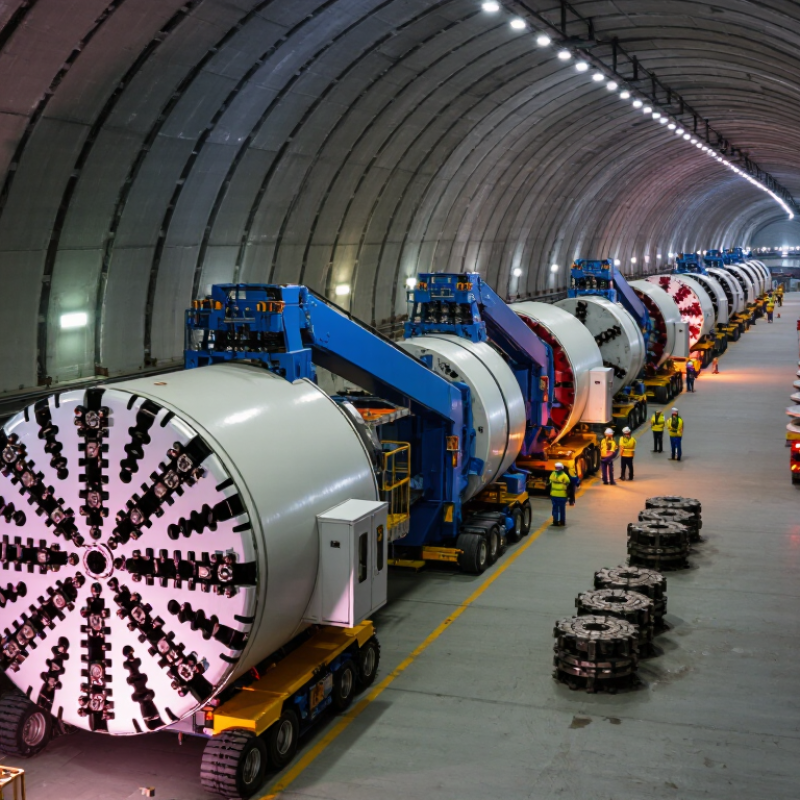
2026 Best Tunnel Drilling Machines for Global Buyers

Define TBMs by Design: EPB, Slurry, Hard-Rock, and 1–19 m Bore Classes

Choosing a tunnel boring machine starts with the ground, not the headline diameter. EPB machines balance face pressure with conditioned excavated soil, then remove spoil through a screw conveyor. They often suit cohesive or mixed urban ground. Slurry machines circulate pressurized fluid and separate excavated material at the surface, making them useful in permeable, water-bearing soils. The Federal Highway Administration’s 2009 Technical Manual for Design and Construction of Road Tunnels explains how ground and groundwater conditions shape machine selection. A separation plant needs space. That matters in dense sites.

Hard-rock TBMs use rotating disc cutters to fracture rock. Open gripper designs depend on stable ground for support; shielded designs offer more protection in fractured conditions. “Hard rock” alone is not enough to specify a machine. Rock strength, joints, water inflow, and support requirements all affect the choice. The FHWA manual emphasizes assessing these conditions before excavation begins. Site data can still be incomplete.

A 1–19 m bore range is a practical buying screen, not a universal TBM standard. Project records show the range’s scale: Crossrail’s twin-bore tunnels used machines about 6.2 m in diameter, while Washington State Department of Transportation records give the SR 99 tunnel machine a diameter of about 17.5 m. Larger does not automatically mean better. Buyers should compare finished bore, lining thickness, launch-shaft limits, spoil logistics, and ground risk. Diameter charts can hide those constraints.

Match Machine Type to Ground Conditions Using UCS, Abrasivity, and Water Pressure

A reliable tunnel boring machine choice starts with measured ground, not a project label. The ISRM Suggested Methods for Rock Characterization (1981) classifies intact rock with uniaxial compressive strength (UCS): 25–50 MPa is weak, while 100–250 MPa is strong. These ranges help frame cutterhead and thrust requirements, but UCS alone can mislead. A 120 MPa block with persistent joints may behave differently from massive rock of the same strength. Check core logs and probe ahead.

Abrasivity changes tool wear and downtime. Record a Cerchar Abrasivity Index (CAI) from representative samples, alongside mineral content and expected cutter consumption. The ITAtech report Guidelines for the Design of Segmental Tunnel Linings (2019) emphasizes that groundwater and ground loads must be considered in the design process; for machine selection, measure water pressure and likely inflow at tunnel depth. Every 10 metres of water head adds roughly 0.1 MPa of pressure. Small differences matter. A tidy spreadsheet can still miss a fractured water-bearing seam.

Tips: Compare UCS, CAI, and pressure by chainage, not as one site-wide average. Ask for fresh samples from weak and abrasive zones. Recheck assumptions after probe drilling; the ground often refuses to follow the model.

2026 Best Tunnel Drilling Machines for Global Buyers - Match Machine Type to Ground Conditions Using UCS, Abrasivity, and Water Pressure

Screening guide: UCS and abrasivity ranges below are indicative, not machine guarantees. Confirm geology, rock-mass behavior, water inflow and pressure, tunnel diameter, alignment, logistics, and project-specific machine limits before selection.

Ground condition Indicative UCS Abrasivity indicator Groundwater / pressure considerations Potentially suitable machine type Selection notes and key limitations
Competent, relatively uniform hard rock
Limited faulting and manageable inflow
About 80–250+ MPa Low to very high; assess with Cerchar Abrasivity Index (CAI) or equivalent testing Low to moderate inflow is generally easier to manage; assess pressure and inflow at the tunnel face and along the alignment Single-shield or gripper hard-rock TBM Grippers need suitable sidewall rock for reaction. High UCS and high CAI can increase cutter wear, replacement time, and operating cost. A single-shield machine may be preferable where support is needed soon behind the cutterhead.
Fractured, faulted, or changing rock
Variable stand-up time and possible squeezing zones
Highly variable; intact samples may range from below 20 to above 150 MPa Variable; abrasive intact bands may occur between weaker zones Potentially significant inflow or pressure where faults connect to aquifers; investigate probe drilling, grouting, and drainage requirements Double-shield hard-rock TBM or drill-and-blast A double-shield TBM can install support while advancing where conditions and support design permit. Drill-and-blast can offer flexibility in highly variable ground, but requires careful blast design, support, ventilation, and cycle-time planning.
Soft to medium-strength rock
Generally excavatable, with local harder bands possible
Typically below about 60–80 MPa for many roadheader applications; actual limit depends on machine and rock mass Low to moderate preferred; high abrasivity can make pick wear and productivity unfavorable Dry to moderate inflow is generally more manageable; assess face stability and water-softening effects in weak rock Roadheader Useful for variable profiles and non-circular openings. Cutting performance depends on rock strength, abrasivity, jointing, cutterhead power, and machine mass; hard or highly abrasive bands may reduce production sharply.
Soft, cohesive, water-bearing soil
Clay, silt, or mixed soil requiring face support
Not normally characterized by UCS alone; use soil strength, grading, plasticity, and permeability data Not applicable as a rock CAI rating; assess wear from sand, gravel, and any rock content Groundwater pressure can require pressurized face support; pressure is site-specific and must be matched to ground and operating design Earth Pressure Balance (EPB) shield TBM Often suited to cohesive soils where excavated material can be conditioned to maintain face pressure. Very permeable ground, coarse materials, or difficult water conditions may require a different pressure-support approach or additional treatment.
Permeable sand, gravel, or water-bearing mixed ground
Potentially unstable face and high inflow risk
Not normally characterized by UCS alone; assess soil grading, permeability, and boulder content Not applicable as a rock CAI rating; gravel and cobbles can cause mechanical wear and obstruction Elevated groundwater pressure may require pressurized excavation, appropriate slurry management, and face-pressure control Slurry-shield TBM Slurry support can help stabilize permeable ground and transport excavated material. Suitability depends on particle-size distribution, slurry treatment capacity, separation-plant space, water management, and the designed pressure range.
Mixed face: soil and rock, or frequent changes in strength
Possible boulders, weak seams, or uneven excavation behavior
Variable; characterize soil and intact-rock UCS separately, including the size and continuity of hard inclusions Variable; test representative rock types and assess tool wear from coarse particles Assess both water pressure and the risk of sudden inflow through permeable layers, fractures, or their interfaces Mixed-ground shield TBM, selected for the face-support needs Choose EPB or slurry support based on soil behavior, permeability, pressure, and material handling. Cutterhead openings, tools, wear protection, and boulder-handling provisions should reflect the site investigation.
Very variable geology or short tunnels with changing support needs
Access and excavation sequence allow conventional methods
Broad range, from weak rock to very strong rock Broad range; abrasive rock increases bit and tool consumption Water control may involve drainage, probe holes, pre-grouting, or other site-specific measures Drill-and-blast with drilling jumbo Adaptable to changing profiles and support classes. Performance depends on drilling accuracy, blast design, mucking, ventilation, ground support, and safe handling of water and unstable ground.

Reference notes: UCS is unconfined compressive strength of intact rock, usually reported in MPa. CAI is the Cerchar Abrasivity Index; its interpretation and test results depend on the test method and sample. Hydrostatic water pressure is approximately 0.0098 MPa per metre of water head, but actual design pressure must account for groundwater conditions, elevation, and project requirements. Soil selection should use geotechnical soil parameters rather than rock UCS or CAI.

Compare 2026 Models by Diameter, Thrust (MN), Torque (MN·m), and Cutterhead

For 2026 tunnel drilling machines, compare usable diameter with thrust and torque—not diameter alone. Crossrail project records describe tunnel boring machines with 7.1-metre cutterheads, a useful real-world reference point, not a universal specification. For early screening, machines around 6–8 metres may fall near 30–80 MN thrust and 5–20 MN·m torque; larger 10–14-metre units may require roughly 80–200 MN and 20–60 MN·m. These are indicative planning bands, not guaranteed model ratings. Ask suppliers for continuous and peak values, plus the operating conditions behind them.

Cutterhead design must match the ground. Open heads suit stable rock; closed-face designs help control pressure in softer, water-bearing ground. Mixed-face routes need adaptable cutting tools and accessible inspection points. The FHWA’s Technical Manual for Design and Construction of Road Tunnels stresses matching construction methods to geology and groundwater. ITAtech guidance likewise supports project-specific TBM selection. Compare cutter diameter, disc-cutter layout, openings, and muck removal alongside the headline numbers. A high torque rating looks reassuring, but it cannot compensate for poor ground investigation. These bands are imperfect; actual requirements shift with rock strength, abrasivity, cover, and wear limits.

Assess Project Fit Through Advance Rate, Downtime, and Segment-Logistics Data

A tunnel boring machine should be assessed against the ground it will actually face, not only its rated advance rate. Compare expected metres per day with similar geology, tunnel diameter, and operating hours. Ask whether the figure includes maintenance stops and cutter changes. A fast shift is useful only if it reflects sustained progress. Track planned and unplanned downtime separately, and request the assumptions behind each estimate. Small details matter.

Segment logistics can reshape the schedule. Check production capacity, segment dimensions, storage space, and delivery frequency against the machine’s ring-building cycle. A machine may advance quickly, yet wait for segments if a port delay or a narrow site disrupts supply. Review transport routes, lifting limits, buffer stock, and local handling equipment before setting a delivery plan. These details are easy to underestimate.

Use the same measurement period for every supplier, such as operating hours and completed rings per week. Then test the plan against a slow month, not just ideal conditions. Site records from comparable projects are more useful than a single best-case number, though conditions still differ. A spreadsheet will not capture every shift problem. That is worth admitting. Ask operators how often the forecast slipped, and why.

Verify Safety and Lifecycle Value Against EN 16191 and Total-Cost Metrics

For 2026 tunnel-drilling machine procurement, treat EN 16191:2014 as a verification baseline, not a safety guarantee. The standard addresses safety requirements for tunnel boring machines. Ask for the applicable conformity documents, risk assessments, emergency-stop details, and inspection records. Check access routes, guarding, fire protection, and maintenance points against the actual tunnel layout. A certificate alone cannot show how safely a machine will operate in your ground conditions. Small details matter. Even a poorly placed service panel can add delays during a shift.

Compare lifecycle cost per meter advanced, not purchase price alone. Include energy use, cutter changes, planned maintenance, spare-part lead times, training, and downtime assumptions. McKinsey Global Institute’s 2017 report, Reinventing Construction, found construction productivity grew about 1% annually from 1995 to 2015, versus 2.8% for the wider economy. That broad industry measure is not a TBM benchmark, but it highlights the cost of lost productivity. The Global Infrastructure Hub’s 2017 Global Infrastructure Outlook estimated $94 trillion in infrastructure investment needs by 2040. The estimate is global, not tunnel-specific. Still, it makes disciplined cost comparison worthwhile. Ask bidders to show assumptions in a common format, then test them against local power prices, geology, and maintenance access. A tidy spreadsheet can still hide optimistic downtime estimates.

2026 Best Tunnel Drilling Machines for Global Buyers

Verify safety against EN 16191 and compare lifecycle value using project-specific total-cost metrics.

How to use this chart: The bars show an illustrative five-year TCO allocation, not verified industry averages or supplier data. Replace the percentages with project-specific purchase, energy, maintenance, downtime, and training or compliance costs before comparing machines.

Safety check: Assess each machine against the applicable EN 16191 edition and scope for your project and jurisdiction. Verify relevant safety documentation and protective measures separately; this cost chart does not indicate or certify compliance.

FAQS

Why isn’t uniaxial compressive strength enough to select a tunnel boring machine?

UCS helps estimate thrust and cutterhead needs, but joints can change rock behavior. A 120 MPa block with persistent fractures may not act like massive rock of equal strength. Check core logs and probe ahead.

What UCS ranges can help describe weak and strong rock?

Weak intact rock is around 25–50 MPa. Strong rock is around 100–250 MPa. These ranges are a starting point, not a complete ground model.

How should abrasivity be assessed?

Measure the Cerchar Abrasivity Index using representative samples. Record mineral content and estimate cutter use, especially in abrasive zones. Fresh samples matter.

How does groundwater pressure affect machine selection?

Measure pressure and likely inflow at tunnel depth. Each 10 metres of water head adds roughly 0.1 MPa. A fractured, water-bearing seam can still surprise the model.

Should ground conditions be averaged across the whole tunnel?

No. Compare UCS, abrasivity, and pressure by chainage. Recheck assumptions after probe drilling. The ground may refuse to follow the spreadsheet.

What safety information should procurement teams request?

Request conformity documents, risk assessments, emergency-stop details, and inspection records. Check guarding, fire protection, access routes, and maintenance points against the actual tunnel layout. A certificate alone is not enough.

Which machine details can affect safety and shift performance?

Inspect service panels, access routes, and maintenance points. A poorly placed panel can add delays during a shift. Small details matter.

How should tunnel boring machine costs be compared?

Compare lifecycle cost per metre advanced, not purchase price alone. Include energy, cutter changes, maintenance, spare-part lead times, training, and downtime. Test assumptions against local power prices and maintenance access.

Why should downtime estimates be checked carefully?

Lost productivity can make an apparently low-cost option expensive. Ask bidders to use a common format, then challenge optimistic assumptions. Spreadsheets can mislead.

Conclusion

Choosing the right Tunnel Drilling machine in 2026 starts with understanding its design and the ground it must excavate. Earth pressure balance and slurry machines suit different soft-ground and water-pressure conditions, while hard-rock machines are built for stronger formations. Available bore classes range from compact diameters to large-scale tunnels. Comparing ground strength, rock abrasivity, and groundwater pressure helps narrow the options before evaluating machine diameter, thrust, torque, and cutterhead configuration.

A strong project fit depends on more than excavation capability. Buyers should consider expected advance rates, maintenance downtime, and how segment delivery and installation affect the construction schedule. Safety provisions and compliance with EN 16191 should also be reviewed alongside lifecycle costs, including operation, repairs, and consumables. Taken together, these factors provide a practical basis for comparing machines and selecting equipment suited to a project’s geology, logistics, performance targets, and long-term budget.

Henry

Henry

Henry is a dedicated marketing professional with a profound expertise in the company's offerings. With years of experience in the industry, he possesses an impressive understanding of the market dynamics and consumer behaviors that drive success. Henry is committed to sharing his insights through......