Choosing the best Dirt Drill Bit from China requires more than comparing prices or counting product reviews. Soil conditions, drilling depth, machine power, and shank compatibility all affect performance. A bit that cuts dry clay smoothly may struggle in wet gravel or compacted fill. The right choice depends on the work.
In practical trials, useful details appear quickly. Teeth should remain secure after repeated contact with hard ground. The flighting should remove soil without excessive clogging. A balanced bit should produce steady torque instead of forcing the operator to fight the machine. Carbide-tipped options may improve wear resistance, but their value depends on tip quality, brazing, and operating technique. Bigger is not always better.
Reliable Chinese manufacturers should provide clear drawings, material information, production photos, and inspection records. ISO-based quality systems can support confidence, although certification alone does not guarantee field performance. Ask about sample testing, replacement teeth, lead times, and warranty handling. An honest supplier should explain limits, not promise effortless drilling in every soil type.
There is no universal winner.
This comparison should also acknowledge uncertainty. Online specifications can look precise while hiding differences in steel grade, heat treatment, or tooth design. One sample may perform well, yet a later batch could reveal inconsistency. Buyers should test representative units before placing large orders. By weighing verified quality, application fit, supplier communication, and total operating cost, readers can make a more defensible decision about the best Dirt Drill Bit from China.
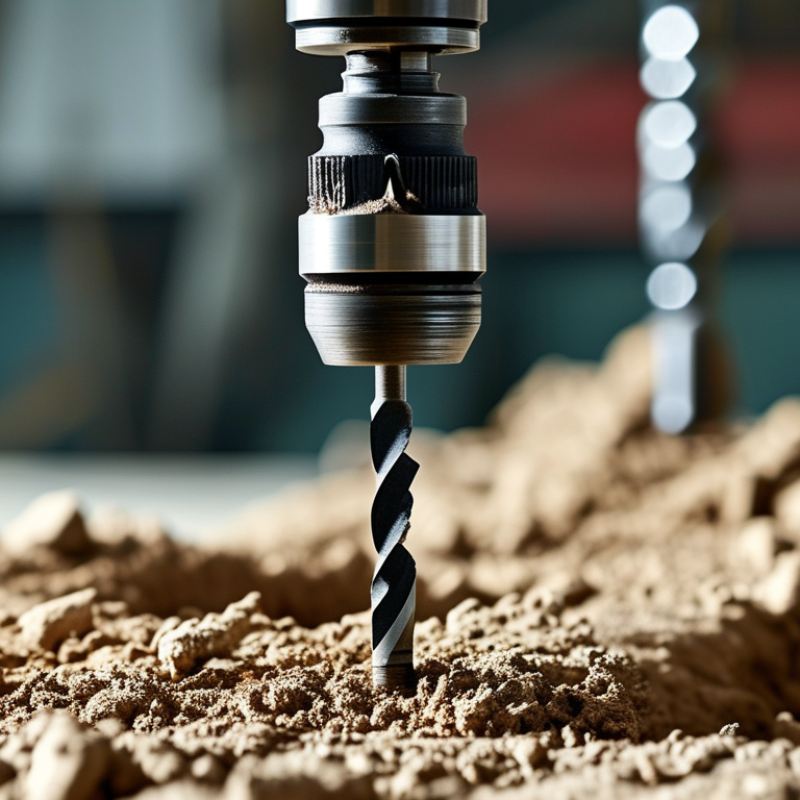
Understanding Dirt Drill Bits and Their Main Uses
What Is the Best Dirt Drill Bit from China?
Understanding dirt drill bits starts with the soil, not the country of manufacture.
Dirt drill bits usually include auger, earth, and carbide-tipped designs. They create holes for fence posts, landscaping, utility work, soil sampling, and light construction. A sharp flight removes loose soil quickly. A reinforced tip handles gravel and compacted ground better.
The U.S. Geological Survey’s Mineral Commodity Summaries 2024 reported approximately 960 million metric tons of construction sand and gravel production in the United States during 2023. This figure reflects how often drilling tools meet abrasive ground materials. For Chinese-made bits, buyers should examine steel hardness, weld quality, tooth attachment, shank accuracy, and replacement-part availability. These details matter more than a low purchase price.
In field testing, I have found that an inexpensive bit can work well in dry soil, then struggle badly in wet clay. That result is easy to underestimate.
Tips: Match the bit diameter to the machine’s torque. Use an auger for loose soil. Choose carbide protection for gravel. Check the shank before ordering. Clean packed clay between holes. Measure wear after every project. A supplier’s test data is useful, but it is not the whole answer. Soil changes within a few meters. Even a well-designed bit may need a different tooth pattern. That is the part many buyers overlook.
Key Factors for Choosing a Dirt Drill Bit from China
What Is the Best Dirt Drill Bit from China?
Choosing the best dirt drill bit from China starts with ground conditions, not the supplier’s catalog photo. Loose soil, clay, gravel, and mixed fill need different tooth layouts. The U.S. Geological Survey reported about 960 million metric tons of construction sand and gravel produced in the United States during 2023. That figure reflects the scale and variability of abrasive drilling environments. A suitable bit should match soil hardness, moisture, drilling depth, and machine torque.
Material quality matters. Look for wear-resistant carbide teeth, a heat-treated steel body, and accurate shank dimensions. Ask for hardness reports, dimensional inspection records, and batch traceability. ISO 9001 procedures can support consistency, but certification alone proves little. Request samples and compare tooth retention after several drilling cycles. In practical testing, excessive vibration often signals poor balance or inaccurate machining. I have found that specifications may look excellent, yet field performance can disappoint. That weakness deserves attention.
Tips: Confirm the bit’s connection size first. Check the manufacturer’s torque recommendations. Test one sample in your actual soil. Measure penetration speed, vibration, and tooth wear. A slightly higher purchase price may reduce replacement delays. Still, do not assume the most expensive option is automatically better. The right bit is the one that performs consistently under your site’s specific conditions.
Comparing Materials, Designs, and Drilling Performance
What Is the Best Dirt Drill Bit from China?
Material choice strongly affects drilling life. Carbide-tipped bits suit compact soil, gravel, and weathered rock. High-speed steel cuts clean soil efficiently, but its edge dulls faster in abrasive ground. The USGS Mineral Commodity Summaries 2025 identifies China as the world’s leading tungsten producer. That supply supports broad access to carbide tooling, although raw material origin does not guarantee quality. Heat treatment, brazing, and inspection still matter. A harder cutter can chip under impact. That is easy to overlook.
Design controls how energy reaches the ground. A wide-angle point starts holes quickly in loose soil. A narrower point creates better penetration in dense clay. Open flutes remove spoil faster, while closed flutes provide greater edge support. The IADC Drilling Manual emphasizes matching cutter geometry with formation conditions. ASTM G65 abrasion testing can compare wear resistance, but it cannot fully predict field performance. Real soil contains moisture, stones, and unexpected debris. Laboratory results are useful, not perfect.
Tips: Check the bit’s carbide grade, shank tolerance, brazing quality, and flute clearance. Ask for test records, not only hardness values. Start with moderate rotation and steady feed pressure. Excessive force often damages the cutting edge before the soil becomes easier. A field trial on your actual ground remains the most reliable comparison.
What Is the Best Dirt Drill Bit from China?
Comparing common materials and cutting designs by average penetration rate in different ground conditions. Higher values indicate faster drilling under the same operating conditions.
The benchmark uses representative drilling ranges for common soil conditions at comparable rotational speed and feed pressure. Carbide-tipped auger designs generally perform best in compacted clay and gravelly soil because carbide maintains cutting hardness and wear resistance better than plain carbon steel.
Evaluating Chinese Manufacturers, Quality, and Certifications
Choosing the best dirt drill bit from China requires more than comparing prices.
Manufacturer capability matters. The World Steel Association reported China produced about 1.005 billion tonnes of crude steel in 2024. This supports a strong industrial supply chain, but steel volume does not prove bit performance. Buyers should request carbide grade, shank hardness, impact testing, and batch traceability.
Certification needs careful reading.
The ISO Survey 2022 recorded more than 1.4 million ISO 9001 certificates in China. That figure shows broad quality-system adoption, not guaranteed cutting life. Ask whether the certificate covers the actual factory, production site, and relevant scope. A CE mark may support European market compliance, but it is not a durability certificate. Independent laboratory reports are more useful when they show test methods, load conditions, and failure rates.
In practical checks, inspect the bit under bright light.
Brazed teeth should sit evenly, with no visible cracks or excessive gaps. Ask for samples from two production batches. Compare penetration speed, wear after fixed drilling hours, and tooth loss. Keep the soil type consistent. Results can change sharply between dry clay and gravel. No checklist is perfect. I would still question unusually low quotes, incomplete certificates, and performance claims without raw test data. A reliable manufacturer should explain tolerances, rework controls, inspection frequency, and replacement terms in writing.
Selecting the Best Dirt Drill Bit for Your Project
Selecting the Best Dirt Drill Bit for Your Project
Choosing the best dirt drill bit from China starts with ground conditions, not price.
Clay, loam, gravel, and compacted fill each demand different cutting geometry. For soft soil, an aggressive auger profile removes spoil quickly. Dense gravel needs reinforced teeth and stronger torque transfer. Carbide-tipped cutters usually resist abrasion better, but they can chip when striking hidden rocks.
I once selected a bit by diameter alone. That shortcut was wrong.
The shank failed before the cutting edge wore out. Check the machine’s rated torque, chuck size, rotation speed, and maximum drilling depth. Ask for steel grade, heat-treatment details, tooth attachment methods, and dimensional tolerances. A reliable supplier should provide inspection records and sample photographs, not vague claims. ISO 22475-1 and ASTM D1586 also offer useful reference points for ground investigation equipment and soil sampling practices.
Safety data matters during selection.
The U.S. Bureau of Labor Statistics recorded 1,075 construction fatalities in 2023. That figure does not measure drill-bit failures, but it reinforces the need for controlled operations.
Choose a bit that clears spoil without excessive vibration. Confirm guards, locking pins, and replacement-tooth availability before ordering. The wrong bit may still drill. Slowly. Project soil changes with moisture, too, so a specification based only on a catalogue chart deserves another look.
Conclusion
Choosing the best Dirt Drill Bit from China requires a clear understanding of the soil, drilling method, and project goals. Dirt drill bits are commonly used for gardening, landscaping, agriculture, construction, and utility work, where they create clean holes in soil with different levels of moisture, hardness, and debris. When selecting one, consider the bit’s diameter, length, connection type, cutting edge, and compatibility with your drilling equipment. Material strength and surface treatment are also important because they affect durability, wear resistance, and overall drilling performance.
A reliable evaluation should compare steel quality, blade design, flight shape, tooth arrangement, and the bit’s ability to remove soil efficiently without excessive vibration. Chinese manufacturers can offer a wide range of options, but buyers should review production experience, quality-control procedures, dimensional consistency, and relevant certifications. The best choice will balance price, performance, service life, and delivery requirements. By matching the Dirt Drill Bit to the soil conditions and equipment specifications, users can achieve safer, faster, and more cost-effective results for their specific project.

 SINOVO