China has become an important sourcing base for drilling tools and related equipment. For buyers planning a Core Drill Hole project, choosing a supplier takes more than comparing prices or catalog photos. A capable manufacturer should understand the target material, hole diameter, drilling depth, and operating conditions. Small details matter. Bit geometry, bond hardness, segment quality, and cooling requirements can affect cutting speed, service life, and hole finish. Ask for technical data, sample testing options, production controls, and clear advice on matching tools to equipment. These checks help make supplier claims easier to assess.
This guide to leading Core Drill Hole manufacturers and suppliers in China helps buyers compare capabilities with care. It considers product range, customization, quality inspection, communication, lead times, and after-sales support. Reliable suppliers should explain tolerances and recommend tools based on real job conditions. Request drawings or test records when available, and confirm exactly what each quotation includes. Price alone is a weak measure. Even experienced buyers can overlook differences in segment formulation or stated service life. Treat performance estimates as starting points, not guarantees: rock type, feed pressure, and water flow all influence results. Some comparisons remain imperfect. Careful questions and documented trial results can still reduce uncertainty and support a dependable sourcing decision.
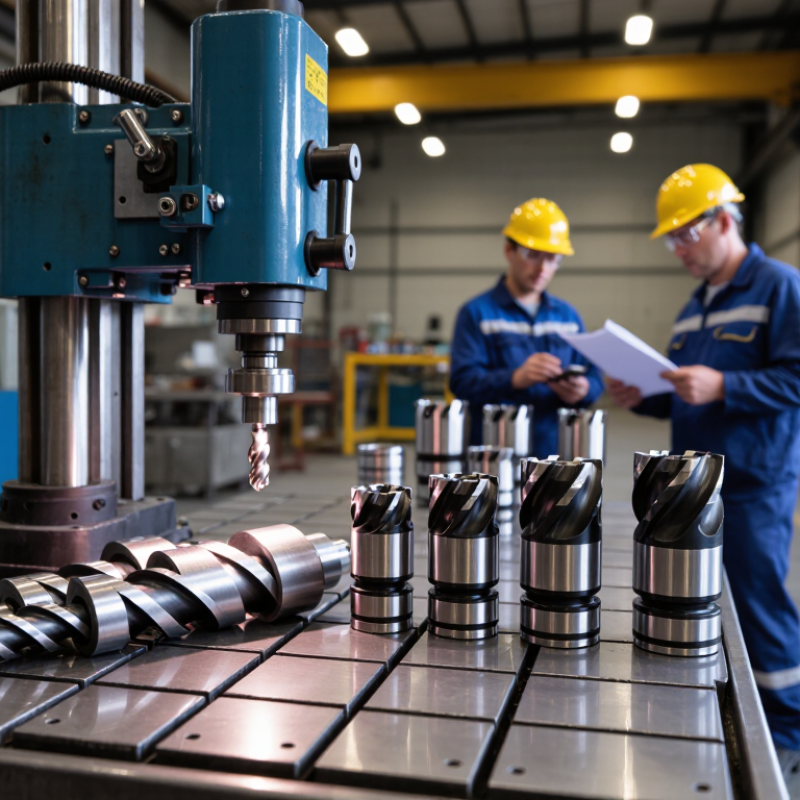
Understanding Core Drill Holes and Their Industrial Applications
Understanding Core Drill Holes and Their Industrial Applications
A core drill removes a cylindrical sample while leaving a relatively clean, round opening. The recovered core can reveal material layers, cracks, voids, and thickness. In construction, engineers use concrete cores to assess existing slabs, walls, and bridge components. In geology, core samples help identify underground rock formations and mineral-bearing zones. The hole is useful, but the sample often matters more.
USGS’s Mineral Commodity Summaries 2024 reported about 91 million metric tons of U.S. cement production in 2023. That figure shows the scale of cement use, not the number of core-drilling projects. Still, it helps explain why reliable testing of concrete structures matters. Hole diameter, depth, bit selection, and drilling angle should match the inspection plan. Water can cool the bit and control dust, but poor handling may damage a sample or obscure small cracks. Results also depend on where the core is taken. One core rarely tells the whole story.
Tips: Mark the exact test location, check for embedded services, and label each core immediately. Record its depth and orientation. Small details matter.
Core Drill Types, Materials, and Manufacturing Processes
Core drill designs vary with the material being cut and the conditions on site.
Diamond core drills are commonly selected for concrete, masonry, and stone, while carbide-tipped designs suit some softer materials. Wet-cutting models rely on water to cool the cutting edge and carry away slurry. Dry-cutting versions use openings or slots to manage heat and dust. Thin-wall barrels can reduce cutting resistance, but the right choice still depends on the drill, feed pressure, and workpiece.
Materials shape performance.
Steel barrels need consistent wall thickness, and diamond segments combine abrasive particles with a metal bond chosen for the material’s hardness. During production, manufacturers may form segments by pressing and sintering, then braze or weld them to the barrel.
The balance matters.
A bond that wears too slowly may polish over; one that wears too quickly can shorten tool life. Quality checks should include barrel runout, segment attachment, and sample drilling under controlled conditions.
A catalog can make selection seem simple. It isn’t always. Buyers comparing suppliers in China can ask for test details, compatible machine specifications, and clear guidance on wet or dry use. A neat finish is useful, but real cutting behavior deserves a closer look.
China’s Core Drill Manufacturer and Supplier Landscape
China’s core drill supplier landscape spans precision-machined bits, drill rods, barrels, and complete coring systems. Many manufacturers serve both domestic projects and export buyers. The market is not uniform. Some workshops focus on standard sizes, while others adapt tooling to rock hardness, bore diameter, and site conditions. S&P Global Market Intelligence reported that the global nonferrous exploration budget reached about US$12.5 billion in 2024, up 2% from 2023. That spending supports demand for dependable drilling equipment, but it does not guarantee steady orders for every Chinese supplier.
Buyers comparing suppliers should examine material specifications, heat-treatment records, thread compatibility, and inspection documents. Ask how a supplier controls concentricity and bit-face quality; small deviations can affect core recovery and wear. Details matter. The USGS estimated global copper mine production at roughly 23 million tonnes in 2024, reflecting the scale of mineral activity that relies on geological investigation. Still, a published production capacity is not proof of performance in a particular formation. Sample reports, tolerances, and replacement-part lead times offer more useful evidence. The picture is not perfectly neat: product catalogs often describe ideal conditions, while field geology rarely cooperates.
Profiles of Notable Chinese Core Drill Manufacturers and Suppliers
Chinese core-drill suppliers serve exploration contractors with different needs: some manufacture complete rigs, while others specialize in core barrels, drill rods, bits, or replacement parts. S&P Global Market Intelligence’s 2024 exploration report estimated the global nonferrous exploration budget at about US$12.5 billion, up 2% from 2023. That spending supports demand for dependable equipment, but does not guarantee every supplier offers equal field support.
A useful supplier profile should identify drilling method, rated depth, compatible wireline sizes, and service capacity. For example, buyers can check whether a rig supports NQ, HQ, and PQ core systems, then compare feed force, rotation speed, and component availability. Ask for test records and material specifications. Paper claims are easy.
Suppliers with in-house machining may offer closer control over rods and core-barrel tolerances; firms focused on distribution may provide broader parts access and faster sourcing. Yet production capacity alone is a weak measure. Request sample inspection reports, export packaging details, and realistic lead times for wear parts. A catalog can look precise while field support remains unclear, so verify response arrangements with the actual sales and service team.
How to Evaluate and Source Core Drilling Products in China
Sourcing core drilling products in China requires more than comparing quotations. S&P Global Market Intelligence’s 2023 World Exploration Trends report estimated global nonferrous exploration budgets at US$12.8 billion, down 3% from 2022. That shifting investment makes dependable tools and predictable replacement costs important. Buyers should match bit type, core diameter, thread connection, and rock conditions to the actual drilling plan. A low unit price can become expensive when a tool wears quickly or causes repeated trips.
Ask suppliers for material specifications, heat-treatment records, dimensional inspection results, and batch traceability. For drill rods, check straightness and thread fit; for core bits, compare gauge retention and expected service life. Request recent production photos and confirm which processes happen in-house. A polished catalog is not proof. Details matter. Consider a small trial order, then record penetration rate, core recovery, and wear under comparable site conditions. Results can vary with operator technique and geology, so one test is not conclusive.
Before paying a deposit, clarify packaging, lead time, replacement terms, and inspection arrangements in writing. Verify that samples match production specifications, not just a specially prepared display piece. Ask how defects are handled and what evidence supports stated performance. Some buyers focus heavily on price; that can overlook inconsistent batches. It is worth checking. Factory visits or independent pre-shipment inspections may help, especially for first-time orders. Keep the evaluation practical: measurable quality, clear documentation, and communication that remains responsive after shipment.
Conclusion
Core Drill Hole technology is essential for creating precise openings in concrete, stone, and other construction materials. This overview explains how core drilling supports construction, infrastructure, and industrial projects, then introduces common drill types, material choices, and manufacturing processes. Factors such as cutting performance, durability, and compatibility with drilling equipment help determine which product is suitable for a particular application.
The article also surveys China’s core drill manufacturing and supply landscape, describing the range of capabilities buyers may encounter without focusing on individual brands. It outlines practical ways to assess suppliers and source products, including comparing specifications, quality controls, production capacity, communication, and after-sales support. With a clear understanding of these considerations, buyers can make more informed decisions when selecting Core Drill Hole products for project requirements.

 SINOVO