Choosing a reliable Pilot Drill Bit supplier is rarely a simple price comparison. Global buyers must examine steel grade, tip geometry, shank accuracy, coating quality, and production consistency. A bit may look strong in a catalog but wobble under real cutting pressure. That small movement can damage the hole, waste material, and slow an entire production line.
Dr. Chris McIntyre, an industrial drilling specialist, describes the principle clearly: “A Pilot Drill Bit is small, but its alignment controls the cut.” This observation matters when buyers compare suppliers from China. Strong manufacturers usually provide dimensional drawings, material certificates, sample testing, and clear tolerance data. They also explain whether their products suit annular cutters, magnetic drills, structural steel, or other applications. Details matter. So does communication.
This guide reviews China’s top ten Pilot Drill Bit suppliers for international buyers. It considers manufacturing experience, export capability, customization, quality control, packaging, and after-sales support. Factory photographs alone prove very little. A clean workshop is useful, but repeatable performance is more important. Buyers should request samples and test them against their actual machines and materials.
The ranking is not perfect. Supplier capabilities can change, and published specifications may not show every production weakness. That is worth remembering. Still, this comparison offers a practical starting point for procurement teams seeking stable quality, transparent documentation, and dependable delivery. The best supplier is not always the cheapest. It is the one that performs consistently when the drill meets real steel.
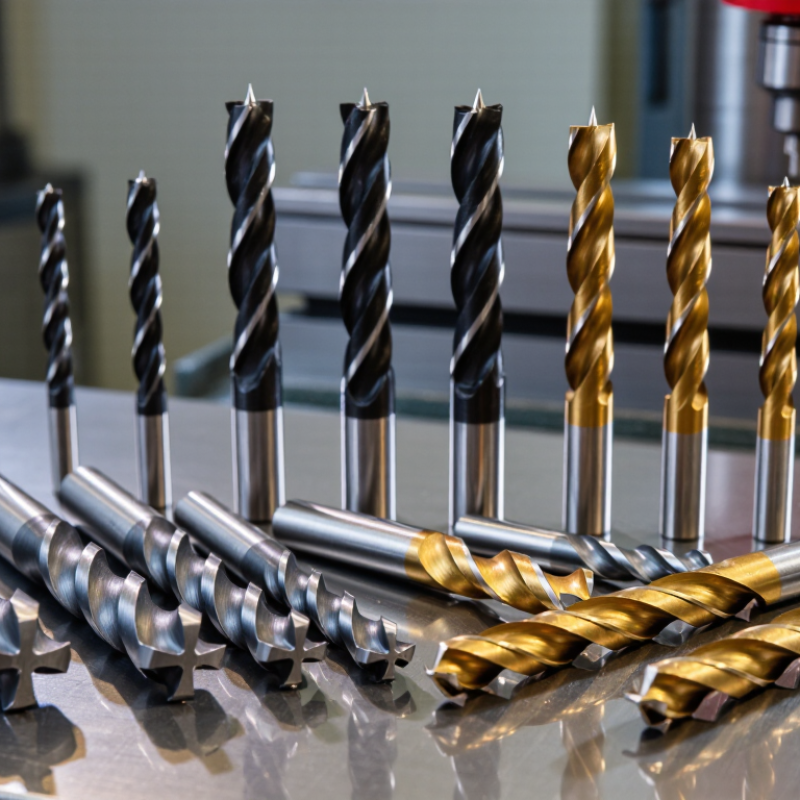
Pilot drill bits create a controlled starting path before a larger cutter enters the material. They are used in masonry, metal fabrication, mining, tunneling, and utility installation. In core drilling, the pilot assembly stabilizes entry and reduces wandering on uneven surfaces. With hole saws, it centers the annular cutter and limits early vibration. That small point matters.
Selection depends on substrate, diameter, rotation speed, coolant, and required hole accuracy. In hard concrete, carbide geometry and brazing quality often matter more than a low purchase price. Yet buyers sometimes over-specify the bit. That wastes time and can increase breakage.
The U.S. Geological Survey recorded about 91 million metric tons of U.S. cement production in 2023. That figure does not measure pilot-bit demand directly. It does, however, reflect a large base for drilling, anchoring, repair, and infrastructure installation.
The International Energy Agency’s World Energy Investment 2024 report projected global energy investment above 3 trillion dollars in 2024. Geothermal wells, grid foundations, and industrial maintenance require controlled starts. Pilot bits support these tasks, but they are not universal.
Rock, rebar, heat, and dust can defeat an otherwise suitable design. A credible China top-ten supplier review should compare material certificates, dimensional inspection records, runout data, and application testing. Ask how performance changes after repeated holes. Marketing claims can be clean; jobsite results are messier.
Evaluating Chinese pilot drill bit suppliers requires more than comparing online prices. Start with the bit’s working purpose, such as steel framing, concrete drilling, or wood positioning. Check the alloy grade, tip geometry, shank size, and heat-treatment process. Small differences matter.
Request technical drawings, material certificates, and recent inspection records. A dependable supplier should explain tolerance limits, hardness testing, runout control, and coating performance in clear language. Ask for samples from normal production, not specially prepared pieces. Test them under realistic pressure, speed, and material conditions. Measure cutting stability, hole accuracy, wear, and breakage after repeated use.
Factory verification adds useful evidence. Review production equipment, calibration labels, worker training, and batch traceability. Confirm whether inspections occur during production or only before shipment. Packaging also deserves attention; poorly protected tips can arrive with damaged edges. Lead times, replacement procedures, and export documentation should be written into the purchasing agreement.
Communication is a practical test. Does the supplier answer technical questions directly? Vague promises are warning signs. A low quote may hide inconsistent steel or weak quality control. I have seen attractive samples perform well, while later batches varied more than expected. That possibility should shape the inspection plan. No supplier is perfect. Even strong documentation cannot replace independent testing, especially when the bits will face demanding industrial use.
China’s top 10 pilot drill bit suppliers differ mainly by product focus and manufacturing capability. Several specialize in high-speed steel pilot bits for hole saws and light fabrication. Others produce carbide-tipped models for brick, concrete, and abrasive panels. One supplier focuses on stepped pilot bits, while another supports custom shank sizes for industrial equipment. These product differences matter when buyers compare cutting speed, heat resistance, and service life.
The strongest suppliers usually control more than final assembly. They inspect steel hardness, flute geometry, tip alignment, and shank concentricity. Some offer titanium or black oxide coatings for improved wear resistance. Others provide brazing, CNC grinding, and small-batch customization under one facility. A capable factory should explain its tolerance range clearly. Vague claims deserve caution. Sample testing remains essential.
Buyer experience also separates these ten suppliers. Reliable exporters provide drawings, material certificates, packaging photographs, and stable production schedules. Some accept low trial quantities, which helps distributors test local demand. Others manage larger orders with automated inspection and batch traceability. However, a polished catalog does not guarantee consistent drilling results. I would compare actual samples, not promises. Even strong suppliers may show occasional variation between batches, especially after tooling changes. That weakness should be discussed before approval.
China Top 10 Pilot Drill Bit Suppliers for Global Buyers
When comparing China’s top ten pilot drill bit suppliers, buyers should examine more than catalog photos. Experienced purchasers review carbide grade, shank tolerance, cutting-edge geometry, and coating consistency. Samples reveal details that brochures often hide. A stable supplier should provide inspection records, material certificates, and repeatable test results. Quality is measurable.
Certifications also require careful checking. ISO 9001 may support process control, but it does not guarantee every drill bit performs equally. Ask whether certificates cover the factory, product line, or trading office. Pricing should include tooling, packaging, inspection, and shipping terms. The lowest quotation may use inconsistent materials or limited quality checks. Not every low quote is cheap.
Export service can strongly affect project costs. Reliable suppliers explain lead times, minimum order quantities, customs documents, and replacement procedures clearly. They should confirm carton markings and provide photographs before shipment. For larger orders, request a pilot batch and compare hole accuracy, wear, and breakage rates. Communication matters. A capable export team responds with technical answers, not only discounts. Still, a ranking can mislead when suppliers serve different industries and materials. Buyers should record test conditions carefully, because an excellent result in steel may not apply to aluminum, wood, or composite panels.
The anonymous benchmark compares common purchasing criteria for global buyers. Scores are normalized on a 0–100 scale, combining product consistency, certification readiness, pricing competitiveness, export documentation, and delivery reliability.
China Top 10 Pilot Drill Bit Suppliers for Global Buyers
Selecting a pilot drill bit supplier requires more than comparing online prices. In practical sourcing, I check bit material, cutting geometry, shank size, thread accuracy, and coating options. These details affect drilling stability and tool life. Ask for technical drawings before placing an order. A reliable supplier should explain tolerances clearly and provide sample test results. Product photos are not enough.
Evaluate manufacturing experience through factory audits, inspection records, and traceable quality procedures. Confirm minimum order quantities, production lead times, packaging methods, and replacement policies. Communication matters too. Slow or unclear replies may create costly delays later. Request samples from several suppliers and test them on your actual materials. A bit that performs well on mild steel may behave differently in stainless steel or hardwood. Do not trust every impressive claim. Verify it.
Tips: Compare total cost, not unit price alone. Keep one approved sample for future inspections. Ask how the supplier controls tip alignment and edge consistency. Confirm whether production batches receive dimensional checks. Small details matter. I once underestimated packaging quality, and several tools arrived with damaged edges. That experience changed my purchasing checklist. No supplier is perfect, so document risks and agree on corrective actions before payment. Supplier selection should remain evidence-based, patient, and practical.
| Rank | Anonymous Supplier Profile | Manufacturing Region | Typical Product Focus | Common Materials | Available Diameter Range | Coating Options | Indicative MOQ | Typical Sample Lead Time | Typical Bulk Lead Time | Customization Capability | Buyer Verification Priority |
|---|---|---|---|---|---|---|---|---|---|---|---|
| 01 | Supplier Profile A | Jiangsu | General-purpose pilot drills for wood, plastic, and light metal work | HSS M2; carbon steel for selected wood applications | 2–12 mm | Bright finish; black oxide; TiN on request | 500–1,000 pieces | 7–12 days | 25–35 days | Packaging, shank length, point geometry, private labeling | Confirm runout, hardness, point angle, and coating thickness |
| 02 | Supplier Profile B | Zhejiang | Pilot drills for hole saw arbors and woodworking accessories | HSS M2; high-carbon steel; carbide-tipped versions | 3–16 mm | Black oxide; TiN; uncoated carbide | 300–800 pieces | 10–15 days | 30–40 days | Arbor compatibility, custom lengths, mixed-size kits | Check compatibility with the target hole-saw arbor and chuck system |
| 03 | Supplier Profile C | Guangdong | Compact pilot bits for hand tools and maintenance kits | HSS M2; HSS M35 for higher wear resistance | 1–10 mm | Bright finish; black oxide; TiN | 1,000–2,000 pieces | 7–10 days | 20–30 days | Retail sets, blister cards, color coding, barcode labels | Verify package labeling, set composition, and dimensional consistency |
| 04 | Supplier Profile D | Shandong | Heavy-duty pilot drills for steel fabrication and industrial maintenance | HSS M35; cobalt-alloy HSS; carbide options | 3–20 mm | TiN; TiAlN; black oxide | 200–500 pieces | 12–18 days | 35–50 days | Custom point angles, reduced shanks, special tolerances | Request material certificates, heat-treatment records, and cutting tests |
| 05 | Supplier Profile E | Hunan | Precision pilot drills for automated and repeat-production processes | HSS M35; solid carbide for specialized applications | 0.8–12 mm | TiAlN; AlTiN; polished carbide | 100–300 pieces | 15–20 days | 40–55 days | Tight tolerances, custom flute geometry, inspection reports | Review total indicated runout, concentricity, and inspection-method capability |
| 06 | Supplier Profile F | Fujian | Pilot drills and starter bits for construction and repair tools | HSS M2; high-carbon steel; carbide-tipped steel | 2–14 mm | Black oxide; zinc finish; TiN on request | 500–1,500 pieces | 10–14 days | 30–45 days | Tool compatibility, assorted packs, export cartons | Confirm impact resistance, tip brazing quality, and carton protection |
| 07 | Supplier Profile G | Jiangxi | Carbide pilot drills for abrasive materials and long service life | Solid carbide; carbide-tipped steel | 1–10 mm | Uncoated carbide; TiAlN; diamond-like carbon on request | 100–500 pieces | 15–25 days | 40–60 days | Custom carbide grades, flute counts, point preparations | Test edge chipping, carbide grade, and performance under the intended feed rate |
| 08 | Supplier Profile H | Hebei | Value-oriented pilot drills for distributors and maintenance wholesalers | HSS M2; carbon steel; standard carbide tips | 2–16 mm | Bright finish; black oxide | 1,000–3,000 pieces | 7–12 days | 25–40 days | Standard sizes, bulk packaging, mixed cartons | Balance unit price against dimensional tolerance and rejection rate |
| 09 | Supplier Profile I | Anhui | Pilot drills for automotive, machinery, and replacement-part applications | HSS M35; HSS M42 for high-temperature cutting | 1–16 mm | TiN; TiAlN; AlTiN | 200–800 pieces | 12–20 days | 35–50 days | Material upgrades, special shanks, drawing-based production | Verify cobalt content, hardness range, and batch traceability |
| 10 | Supplier Profile J | Chongqing | Special-purpose pilot drills for power tools and field-service kits | HSS M2; HSS M35; carbide-tipped steel | 2–13 mm | Black oxide; TiN; polished finish | 500–1,000 pieces | 10–16 days | 30–45 days | Reduced shanks, quick-change compatibility, tool-kit assembly | Check shank fit, axial alignment, field durability, and replacement policy |
It creates a controlled starting path before a larger cutter enters the material. It helps reduce wandering and early vibration. Common uses include concrete, metal, masonry, mining, tunneling, and utility installation.
The pilot assembly stabilizes entry on uneven surfaces. It keeps the cutter better aligned during the first contact. A stable start can improve hole accuracy. It cannot overcome every material problem.
Consider the substrate, hole diameter, rotation speed, coolant, shank size, and required accuracy. Hard concrete may need carbide geometry and strong brazing. A highly specified bit can still be unnecessary.
Not automatically. A low price may reflect inconsistent steel or limited inspection. Include tooling, packaging, testing, and shipping terms. The cheapest option can become expensive after repeated breakage.
Request technical drawings, material certificates, and recent inspection records. Ask for hardness results, runout data, and tolerance limits. Certificates help, but they do not prove every batch performs equally.
Use samples from normal production. Test them under realistic pressure, speed, and material conditions. Measure hole accuracy, cutting stability, wear, and breakage. Test repeated holes, not only one clean result.
Review production equipment, calibration labels, worker training, and batch traceability. Check whether inspections happen during production. Packaging matters too. Damaged tips may arrive inside perfect-looking cartons.
Not reliably. Suppliers may serve different materials and industries. A result in steel may not apply to aluminum, wood, or composite panels. I might overvalue neat documents. Jobsite evidence deserves more weight.
This guide provides global buyers with a practical overview of Pilot Drill Bit products, including their structure, cutting performance, material compatibility, and common industrial applications in construction, mining, manufacturing, and installation work. It explains how these tools support accurate starting holes and stable drilling operations, while highlighting the importance of selecting the correct size, shank type, cutting material, durability, and application design.
The article also presents a structured approach to evaluating China-based suppliers by comparing product quality, manufacturing capability, certifications, pricing, customization options, delivery reliability, and export services. Buyers can use these criteria to assess supplier consistency, request suitable samples, verify technical documentation, and compare total purchasing costs rather than focusing only on unit prices. By matching drilling requirements with supplier strengths and confirming communication, packaging, inspection, and after-sales support, international customers can make more confident and efficient purchasing decisions.

SINOVO